
Chapter 5: The Domino Effect
How Digital Addiction Derails a Life
A line of dominoes, perfectly placed. Tip the first one, a few harmless hours gaming, and the cascade begins. The first domino does not look like a crisis. A quiet child in a quiet room. Grades start slipping. A close friendship quietly dissolves over a few unanswered texts. Mood darkens. Sleep falls apart. By the time the shape of it becomes clear, parents are standing in the wreckage of dominoes they did not even know were in the line.
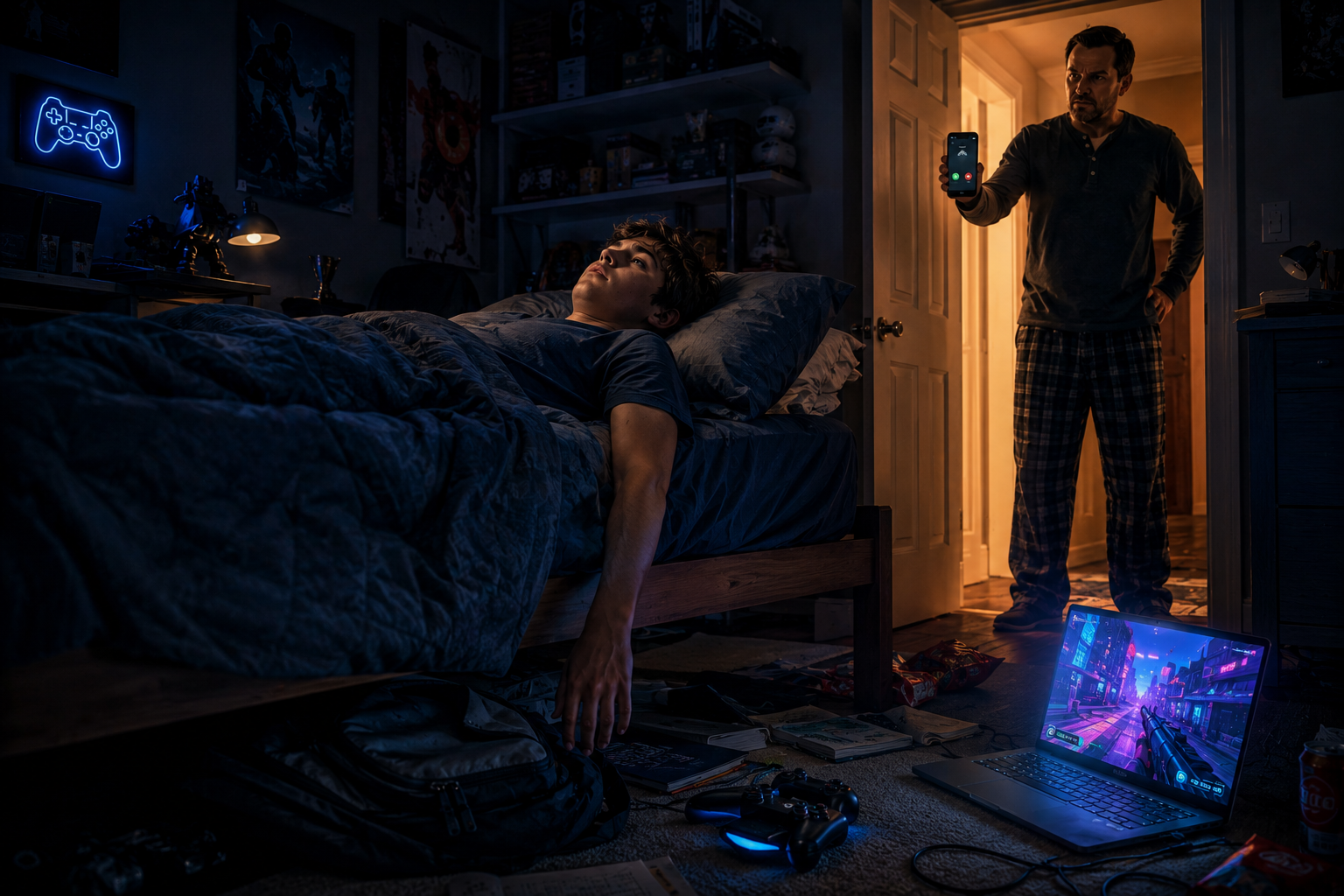
Most families do not arrive at digital addiction through a single dramatic event. They arrive through a slow cascade of changes that, taken one at a time, can each be explained away. This chapter traces the cascade. It shows how cognitive, social, emotional and physical effects feed one another, and why fighting any one of them in isolation tends to fail.
The chapter names the four dominoes in turn. What happens to a child’s thinking and attention. What happens to their friendships and family relationships. What happens to their mood and ability to regulate emotion. And what happens to their bodies, sleep and long-term health. Each section is grounded in research, and each connects back to the dopamine and prefrontal cortex science set out earlier.
What the chapter covers
The chapter is structured around the four domino dimensions of the cascade, and ends with the realistic picture of recovery that follows from understanding them as connected.
- How attention spans collapse from forty minutes to under ten when neural pathways are carved by short-form video and reels.
- Why virtual friendships often feel like connection while quietly costing children the ability to read tone, facial cues and silence.
- How the family disconnect many parents notice has a neurological explanation underneath the daily friction.
- The dopamine-crash cycle in everyday family life, and why parents often misread irritability as attitude.
- The four mental-health drivers, isolation, comparison culture, constant-availability stress and disrupted sleep, that combine in children who used to be fine.
- Why sleep is the central hub of the cascade, and what one disrupted night does to prefrontal cortex function the next day.
- How sedentary screen use, weight changes, posture problems and coordination loss connect quietly to the same underlying pattern.
- Why the same neuroplasticity that allowed the cascade is also the route out, and what realistic recovery looks like in ordinary family life.
How the damage spreads
The chapter replaces four scattered worries with one underlying diagnosis. Failing grades, lost friends, mood swings and weight changes often share a single root. Seeing them as a connected cascade changes the kind of intervention that makes sense.
After reading it, parents tend to stop fighting symptoms in isolation. The chapter also makes the case for hope. Each part of the cascade can shift in the other direction with the right environmental change, held long enough.
For more information on the chapters in the book
Go to the book page